
Have Any Question?
+86 15018094056
Our Working Hours?
7 * 24h
Our Email?
service@evyny.com
+86 15018094056
7 * 24h
service@evyny.com

If you’re a new jewelry designer eager to create stunning pieces in metals like sterling silver and brass, but don’t yet fully understand the manufacturing process, you’re not alone. Stepping into the world of jewelry production can be overwhelming. But understanding the key steps in the process is essential—not just to bring your designs to life, but also to communicate clearly with your jewelry manufacturer and make confident decisions.
In the last 20 years, we’ve worked with countless startup jewelry brands and aspiring designers. One of the most important aspects of what we do is educating our clients on how the production process works. With this knowledge, you can better appreciate why certain methods are recommended and how to make the most of your manufacturing partnership.
As a family business founded in 2005, we specialize in producing sterling silver and brass and stainless steel jewelry in our dedicated jewelry factory in China,This article walks you through our production process, from design to final polish, so you can understand what it really takes to produce custom-made jewelry.
Most modern jewelry manufacturing begins with a CAD (Computer-Aided Design) file. Whether you send us a completed CAD file or we develop one from your sketch, this digital model becomes the blueprint for your jewelry.
Once the design is finalized, we send it to a 3D printer. This produces a castable resin or wax model, which can be used in two ways:
Our production team evaluates each design to determine which method will deliver the highest quality results, depending on complexity, shape, and volume.
When a mold is made, it’s filled with high-performance wax to create precise wax copies of your design. For example, if you order 20 units of a ring, we make 20 wax copy.
These wax copy are attached to a central stem in a structure known as a wax tree. Arranging the wax pieces correctly requires great skill, as their positioning affects the final casting quality.
Once the wax tree is complete, it’s placed in a casting flask, which is filled with a special investment material. This is then heated in a high-temperature vacuum furnace, typically overnight. During this process, the wax melts and leaves behind a cavity in the shape of your design.
The flask is then transferred to the casting machine, where molten precious metals like sterling silver or brass are poured into the mold, filling every intricate detail of the void left by the wax. After cooling, the flask is quenched in water, and the investment material is washed away, revealing your rough metal piece.
Not all jewelry is best suited to casting. For larger items such as lockets, bookmarks, keyrings, or silver spoons, we use traditional metal stamping.
In this process, we start with metal sheets that are rolled to the required thickness and cut to size. These are then stamped using die-cut machines, which shape and emboss the design. We utilize both modern deep-stamping machines and traditional tools to ensure flexibility and craftsmanship in production.
After casting or stamping, every piece undergoes finishing and assembly. This includes:
Depending on complexity, this process might be done in several steps to ensure both structure and aesthetics are perfect. Hand-finishing ensures the piece matches your original vision, whether it’s simple or highly intricate.
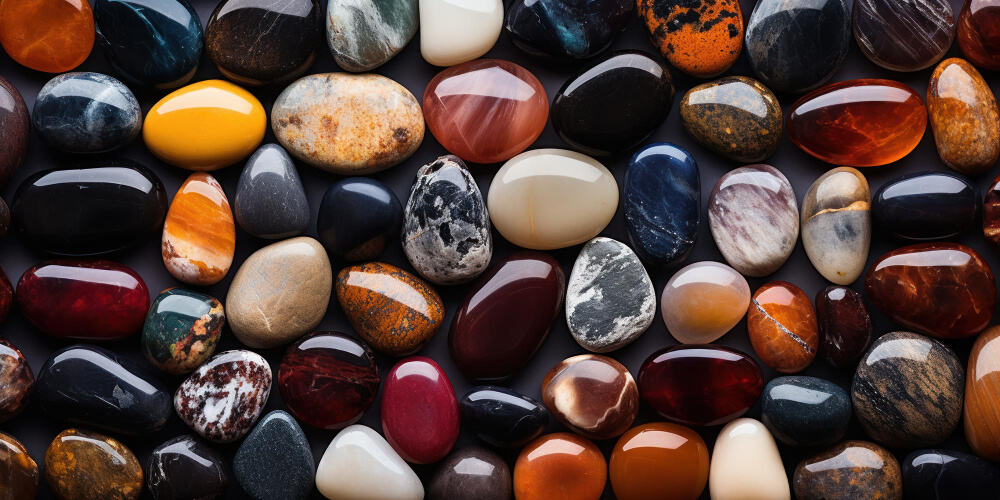
For jewelry featuring gemstones, mother of pearl, or other natural shells, we offer in-house cutting and setting.
Large stones or shells are cut using wet saws, then ground into precise shapes that fit perfectly into their settings—like a puzzle. This level of accuracy requires immense skill and attention to detail, particularly when dealing with tiny inlays or unique cuts.
Our stone-setting experts also handle traditional hand-setting techniques, allowing us to set everything from zirconia and cubic zirconia to semi-precious stones in both sterling silver and brass jewelry.
In our engraving department, we continue to uphold the traditional methods of hand engraving. Whether it’s monograms, patterns, or unique textures, this step adds individuality to your design. For luxury custom jewelry, this final detailing is what sets your product apart in a competitive market.
The final stage is polishing, which can dramatically change the look and feel of your piece. Many designers opt for a high-polish mirror finish, which we achieve by hand. Others prefer a matte or brushed texture, in which case we use barrel polishing machines and specialized abrasives.
Whether your design is bold and shiny or organic and matte, we use the appropriate finishing methods to meet your expectations. Some pieces even combine both styles for a modern contrast.
As you’ve now seen, the production of jewelry combines precision engineering, scientific calculation, and artistic craftsmanship. From CAD design and 3D printing to wax tree assembly, casting, stone setting, and final polishing, every stage plays a critical role in the outcome of your product.
Working with a professional jewelry manufacturer gives you access not only to machinery and labor, but also to generations of specialized knowledge—something that’s increasingly rare in a world of mass production.
Our mission is to help designers like you bring your unique ideas to life with the highest standards of quality, exclusivity, and craftsmanship.
If you’re just starting out in the wholesale jewelry trade or building your own jewelry brand, understanding the production process will empower you to:
The process may seem complicated at first, but you don’t need to master it all alone. That’s why we’re here—to guide you every step of the way.
Want to learn more about how we can support your jewelry business? Visit our website or get in touch for a consultation. And don’t forget to follow us for more behind-the-scenes content, tips, and jewelry design insights.

Jinfeng Jewelry Building B, Meibei Industrial Area, Meilong Town, Haifeng County, Shanwei City, Guangdong Province, China
+86 15018094056
service@evyny.com