
Have Any Question?
+86 15018094056
Our Working Hours?
7 * 24h
Our Email?
service@evyny.com
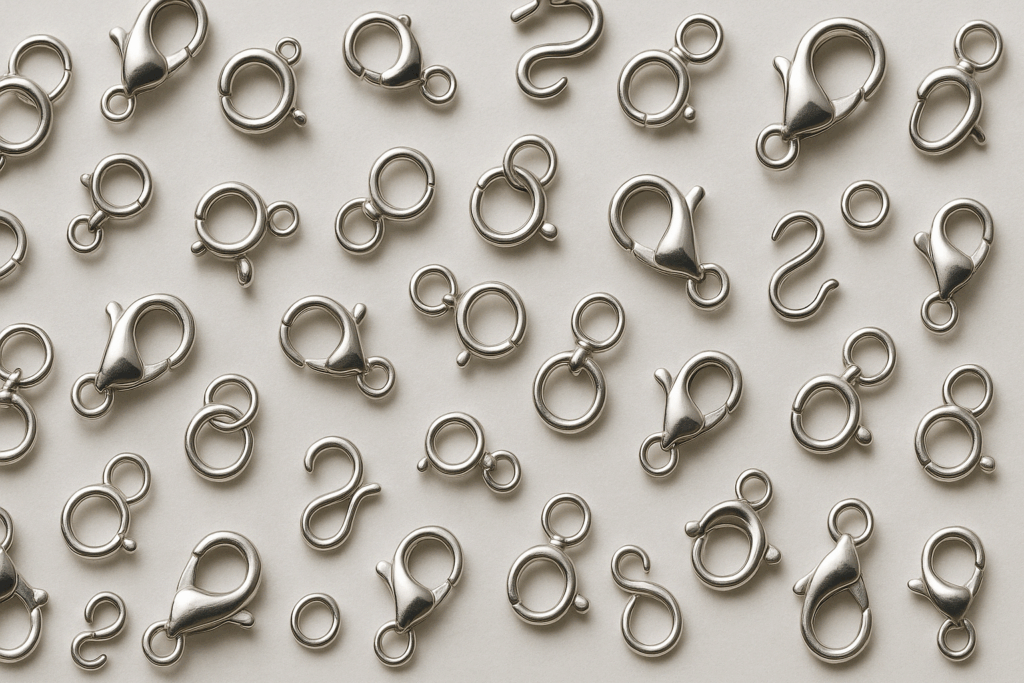
When it comes to jewelry design, the clasp may seem like a small component, but it plays a vital role in both function and aesthetics. A well-chosen clasp not only ensures the security of the jewelry piece but can also elevate its overall style. As a professional jewelry manufacturer, we understand how critical it is to select the right clasp to match your design, whether you are crafting a delicate necklace, a bold bracelet, or a multi-strand masterpiece.
In this comprehensive guide, we will walk you through the most popular types of jewelry clasps, their design features, ideal applications, and the pros and cons of each. Whether you’re a jewelry designer, wholesaler, or DIY enthusiast, this blog post will help you make informed choices for your next collection.

One of the most widely used clasps in jewelry design, the lobster claw clasp gets its name from its resemblance to a lobster’s claw. It features a spring-loaded mechanism that opens when you push a small lever and closes when you release it.
Necklaces, bracelets, anklets, lanyards

A toggle clasp consists of a bar and a ring. The bar is inserted through the ring at an angle and then straightened to prevent it from slipping out.
Necklaces (especially front-closing styles), bracelets, statement jewelry

Slide lock clasps are bar-shaped clasps that slide into each other. They are typically used for multi-strand designs and offer several connection points.
Multi-strand bracelets and necklaces

Magnetic clasps use two magnets to hold the ends of a jewelry piece together. They snap into place and are ideal for users who have trouble operating more traditional clasps.
Necklaces, lightweight bracelets, fashion jewelry

A hook and eye clasp consists of a curved hook on one end and a ring or loop on the other. The hook fits into the loop to secure the jewelry piece.
Casual necklaces and bracelets, especially in bohemian or vintage designs

As the name suggests, the S-hook clasp is shaped like an “S”. One end of the “S” is connected to one side of the jewelry, while the other side hooks onto a loop or ring.
Handmade artisan pieces, lightweight necklaces, ethnic or vintage styles

A fishhook clasp consists of a hook mechanism that slides into an oval or barrel-shaped box and then locks with a snap. Often seen in vintage or fine jewelry.
Vintage-style necklaces, pearl strands, fine jewelry

The box clasp has a tab that fits into a decorative box-like casing. A side latch locks the tab in place.
Bracelets, high-end necklaces, gemstone jewelry

A barrel clasp consists of two halves that screw together. It resembles a small barrel and often has a seamless look.
Necklaces, costume jewelry

The spring ring clasp is a circular clasp with a tiny lever that pulls back a spring-loaded section to open the ring.
Delicate necklaces, anklets, and children’s jewelry

Also known as a tab insert clasp, it includes a folded metal tab that clicks into place and releases by pressing a small button.
Tennis bracelets, gemstone jewelry

The bayonet clasp involves two tubular ends that twist and lock into place with a push-and-turn action.
Modern necklaces, designer pieces
When selecting a clasp for your jewelry design or production line, consider the following:
Jewelry clasps are more than just closures—they’re key design elements that can define a piece’s functionality and visual appeal. From the classic lobster claw to the artistic toggle or practical magnetic clasp, each type serves a different purpose and user need.
As a professional jewelry factory, we work closely with designers and brands to select the perfect clasp for every collection. Whether you’re designing luxury pieces or casual accessories, the right clasp ensures your jewelry is secure, stylish, and easy to wear.
Need help choosing the best clasps for your designs? Contact us today for expert advice, or explore our extensive collection of clasps available in stainless steel, sterling silver, and brass with high-quality plating options.
We are trusted jewelry manufacturer and wholesaler – where quality meets reliability. Let’s grow your business together.