Have Any Question?
+86 15018094056
Our Working Hours?
7 * 24h
Our Email?
service@evyny.com
+86 15018094056
7 * 24h
service@evyny.com

In the ever-evolving world of jewelry design, gemstones play a central role in defining style, enhancing craftsmanship, and delivering a unique customer experience. Among the most popular types of gemstones used in fine and fashion jewelry are cabochon stones and faceted stones. Each type offers distinct aesthetics, advantages, and applications, making it essential for jewelry designers and jewelry wholesaler to understand the differences and benefits when creating new pieces.
This article will dive deep into the differences between cabochon and faceted stones, their roles in jewelry manufacturing, and how designers can strategically incorporate them into their collections. Whether you’re new to gemstone jewelry or looking to refine your production strategy, this guide will serve as a valuable resource.
In recent years, there has been a noticeable trend in the global jewelry industry: the growing popularity of colored gemstone jewelry. More customers are incorporating vibrant, colorful gemstones into their custom jewelry designs, from minimalist pieces to bold statement items.
This trend aligns with broader consumer preferences. Today’s buyers are not only seeking beautiful jewelry but also meaning, uniqueness, and personal expression—often conveyed through the colors and properties of gemstones.
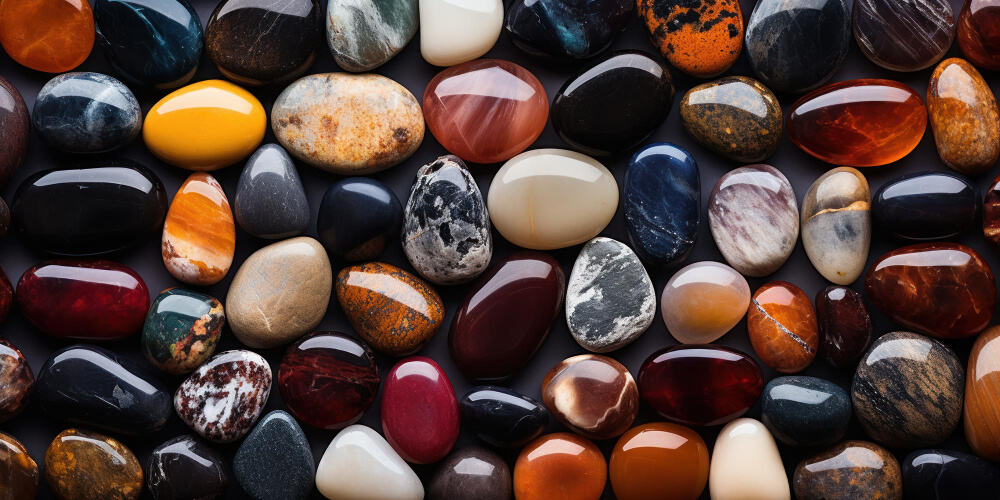
Cabochon gemstones, often referred to simply as “cabs,” are stones that are polished rather than faceted. They feature a smooth, rounded top and a flat back, emphasizing color, texture, and surface luster over brilliance. This timeless style has been used in jewelry for centuries and remains a favorite in artisan and bespoke designs.
Characteristics of cabochon stones:
A unique variant is the sugarloaf cabochon, which is conical and pyramid-like in shape. This rare type adds dimensionality and elegance to high-end jewelry pieces.
Popular cabochon stones include:Turquoise,Onyx,Lapis Lazuli,Coral,Malachite,Larimar,Howlite,Opal
Each of these stones brings a unique energy and look, giving designers the freedom to explore different aesthetics and price points.
The manufacturing process jewelry of preparing a cabochon stone is as much an art as it is a science. At a manufacturing level, it typically involves:
Normally, our factory does not process stones. We outsource the processing to Ketang Town in China, the world’s colored gem center,there are many stone jewelry supplier here. This ensures quick turnaround times and consistency across bulk orders, which is especially beneficial for jewelry brands looking to scale production while maintaining quality.
In contrast to cabochons, faceted stones are designed to reflect and refract light. With multiple flat surfaces—or facets—these gemstones sparkle and shine with every movement. They’re most commonly used for transparent stones like diamonds, sapphires, and quartz, though many colored gems are also faceted.
Key characteristics of faceted gemstones:
The most recognized faceting style is the round brilliant cut, which features 58 facets. This cut maximizes light reflection and is commonly used for diamonds and other precious stones.
Creating faceted stones is a highly technical process requiring modern machinery and expertise. The process includes:
We also outsource these faceted stones to gem factories,these companies have the sophisticated tools and deep expertise needed for advanced faceting, making outsourcing the more cost-effective and efficient option.
Both cabochon and faceted stones have unique qualities that can enhance a jewelry collection. The decision ultimately comes down to design goals, target audience, cost, and brand identity.
Cabochon stones are ideal if:
Faceted stones are perfect if:
Cost plays a critical role when selecting stones for jewelry manufacturing. Generally, cabochons are more affordable than faceted stones, allowing for the use of larger carat weights without significantly increasing retail prices. This makes cabochons a smart option for brands that want to provide vibrant, affordable luxury.
When sourcing gemstones, always consider:
In Evyny jewelry manufacturer ,stones are typically outsourced to trusted partners to ensure optimal quality and cost efficiency.
Choosing between cabochon and faceted stones should also reflect your brand’s philosophy. Ask yourself:
Does the stone reflect the values of my brand?
Does it align with the aesthetic I’m trying to achieve?
Will my target customers connect with the stone’s symbolism or healing properties?
For instance, a brand focusing on spiritual wellness might gravitate toward malachite or lapis cabochons for their metaphysical associations. A fine jewelry brand, on the other hand, may favor faceted amethysts or topaz for their refined sparkle.
If you’re unsure which direction to take, the best approach is to order samples. Many customers of Evyny jewelry manufacturer request a few pieces in standard sizes—such as 6x8mm ovals or 10mm rounds—just to see what resonates with their vision.
This tactile experience allows you to experiment with how the stones interact with metal settings, how light plays across the surface, and how the colors work together within your collection.
Incorporating gemstones into your jewelry line is an exciting opportunity to add depth, color, and emotion to your brand. Both cabochon and faceted stones offer unique advantages, and understanding their differences is key to making informed design and sourcing decisions.
As a jewelry manufacturer in China,we continue to support jewelry designers around the world in bringing their visions to life—whether that means crafting bold, colorful cabochon jewelry or producing precision-set pieces with faceted brilliance.
As always, do your research, communicate closely with your jewelry factory, and trust your instincts as a designer. After all, the magic of jewelry often lies in the details—and the stone is a central part of that story.

Jinfeng Jewelry Building B, Meibei Industrial Area, Meilong Town, Haifeng County, Shanwei City, Guangdong Province, China
+86 15018094056
service@evyny.com